

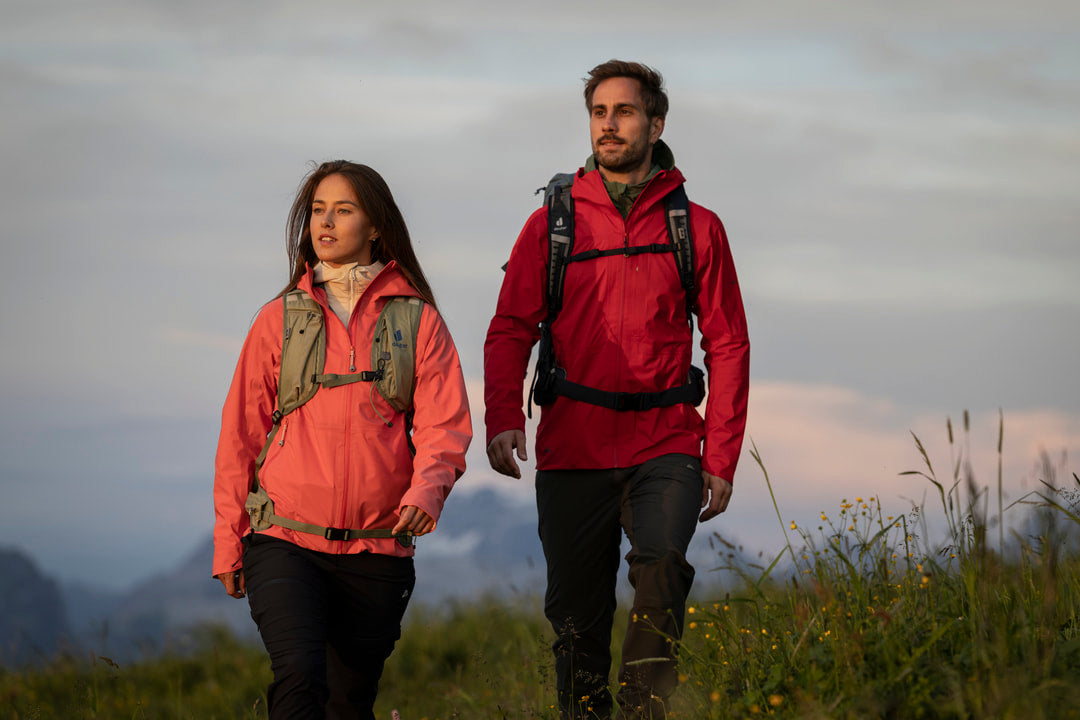
A cool start in the morning. Sweat during the ascent. Wind at the summit. And perhaps a brief rain shower during the descent.
Late summer is one of the best times for hikes and mountain tours. At the same time, it places particular demands on your clothing. While it may still be pleasantly warm in the valley, shade, wind, and longer breaks at higher elevations can already feel surprisingly cool.
The solution is not wearing as much clothing as possible, but choosing the right combination. With a well-designed layering system, you can respond flexibly to the weather, temperature, and activity.

Why layering is particularly important in late summer
In midsummer, a lightweight shirt is often enough. In autumn, a warm jacket is part of your outfit from the start. In late summer, the situation is less clear-cut.
Temperatures can change significantly within just a few hours. There are also differences between sunny and shaded sections, strenuous ascents, and relaxed breaks.
Your clothing should therefore fulfil three functions:
- reliably transport sweat away from your body
- provide lightweight warmth when needed
- protect you from wind and brief changes in the weather
That is exactly what the RADYS Modular Layering System was developed for, with its five coordinated layers.
R5: The right foundation directly against your skin
The Base Layer forms the foundation of your outfit. It sits directly against your skin and ensures that moisture is transported away quickly.
Lightweight, quick-drying performance shirts are ideal for active tours. If it is already cool in the morning or you tend to take longer breaks, a merino shirt can be a comfortable alternative.
A good R5 Base Layer does not automatically keep you warm. But it helps you stay dry. And staying dry is the most important foundation for a comfortable body climate.
R4: Lightweight warmth when you need it
The R4 Mid Layer goes over the Base Layer and provides additional warmth. In late summer, it should be lightweight, stretchy, and easy to pack away.
A thin stretch fleece or a lightweight vest is particularly suitable. You can wear the Mid Layer at the cool start, take it off during the ascent, and put it back on at the summit.
The advantage over a single thick jacket: You can adjust your clothing much more precisely. This helps prevent you from overheating and sweating too much during the ascent.
R2: Protection from wind and changing weather
Wind dramatically changes how the temperature feels. Especially on ridges, summits, or exposed slopes, an otherwise mild late-summer day can suddenly feel cool.
An R2 Softshell Layer protects against wind, is water-repellent, and provides plenty of freedom of movement at the same time. It is ideal for dry days with changing conditions and can be worn directly over the Base Layer or over a lightweight Mid Layer, depending on the tour.
A Softshell provides additional protection during short, light showers. However, if prolonged rain is forecast, a waterproof R1 Hardshell belongs in your backpack.

Three simple layering formulas for late summer
For a sunny day hike
R5 Base Layer + lightweight R4 Mid Layer in your backpack
Start with the Base Layer and put on the Mid Layer only when it gets cooler. This helps you avoid unnecessary sweating.
For a windy summit tour
R5 Base Layer + R2 Softshell
The Softshell protects you from the wind while still providing comfortable climate and freedom of movement.
For uncertain weather conditions
R5 Base Layer + lightweight R4 Mid Layer + R1 Hardshell in your backpack
This prepares you for cool temperatures, breaks, and rain without having to carry too much throughout the entire tour.
Three common layering mistakes
1. Starting out too warm
If you feel comfortably warm at the starting point, you are often already wearing too much. It is better to start out slightly cool. After a few minutes of movement, your body temperature will rise automatically.
2. Waiting too long to take off a layer
Take off a layer before you start sweating heavily. Don’t wait until your shirt is already completely wet.
3. React only when you take a break
Put on your insulating or windproof layer as soon as you reach the summit or take a break. This helps retain the body heat you have built up.
Pack less. Combine better.
Good layering does not mean packing as many garments as possible. What matters is that each piece has a clear function and can be combined flexibly with the other layers.
This keeps you comfortably dry and ready for changing conditions during cool starts, warm climbs, and windy summits.
Selected RADYS layers for your next late-summer adventures are currently available in the Summer Sale.


