

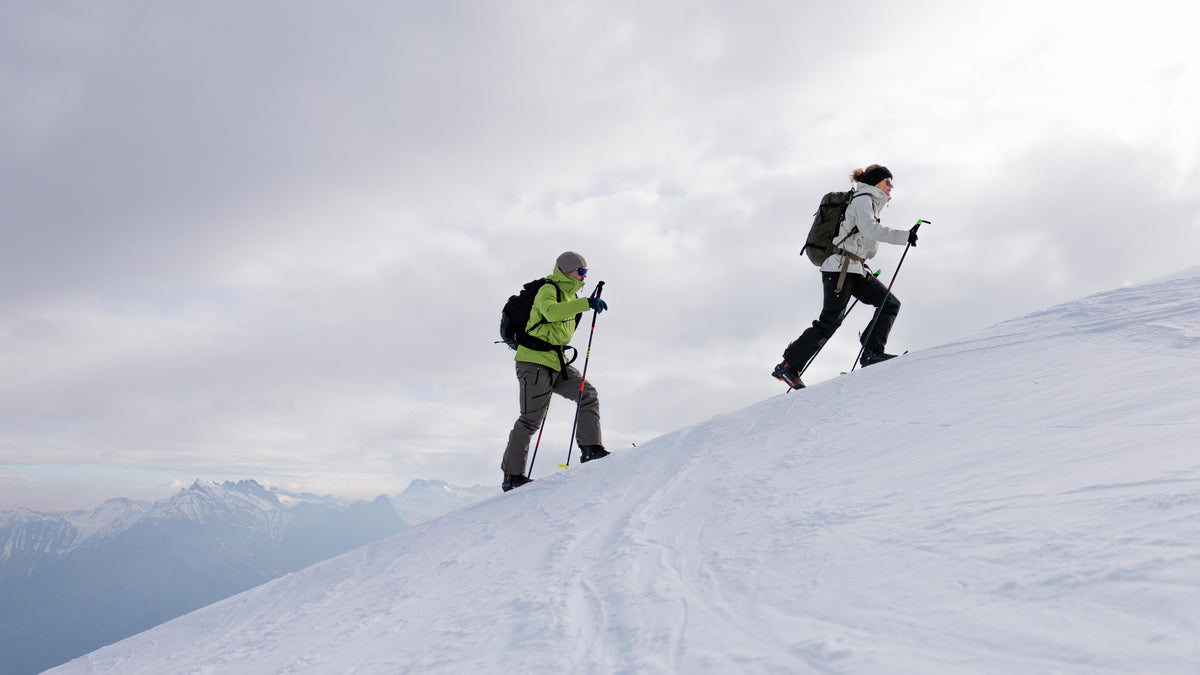
Sunny climb. Wind on the ridge. Rain on the way back. In the mountains, what you need from your jacket can change within a few hours.
A softshell is comfortable to wear while moving and offers protection from wind and light rain. A hardshell is ideal when you need reliable protection from rain, snow, and strong winds.
RADYS offers two layers for this: R1 hardshell and R2 softshell. The best way to decide which jacket to wear and which to pack in your backpack is to consider your trip.
R1 and R2: The difference lies in protection and airflow
The R1 Hard Shell Layer is waterproof and windproof. Its membrane keeps precipitation out and allows water vapor to escape. This makes R1 your outermost protective layer in wet and demanding conditions.
The R2 Soft Shell Layer features wind- and water-repellent, stretch double-weave fabrics. The R’Shell fabrics have no integrated membrane. This allows air to flow directly through the material, which can be comfortable on strenuous climbs.
|
Feature |
R1 Hardshell |
R2 Softshell |
|
Precipitation |
Waterproof protection |
Water-repellent, limited protection |
|
Wind |
Windproof |
Wind-resistant |
|
Material construction |
Weather protection with a membrane |
Stretch double-weave fabric without a membrane |
|
Performance in use |
Protection from rain, snow, and strong winds |
Airflow and freedom of movement in mostly dry conditions |
Here are our recommendations for four typical situations in the mountains.
1. Sunny mountain hike with a cool wind: R2
You set off in the shade in the morning. Later, the trail climbs steeply through the sunshine. A cool wind blows at higher elevations, and precipitation is unlikely.
This is where an R2 Softshell shows its strengths. It offers wind protection, moves with you, and lets air circulate through the fabric. If you get too warm on the climb, unzip the jacket or stow it temporarily in your backpack.
The R2 Hiking Softshell Jacket is designed for these kinds of outings. Its stretchy R’Shell Hiking fabric, adjustable hem, and chest and front pockets make it a practical companion for active days on the trail.
Our recommendation: Wear the R2 as long as you need wind protection. For a long tour with uncertain weather, pack an R1 as a backup for rain too.
2. Approach to the hut in rain or wet snow: R1
Several hours to the hut. Low clouds. The rain is getting heavier or turning to wet snow higher up.
Waterproof protection is what matters now. A water-repellent softshell can keep out light precipitation for a while. In persistent wet weather, you need a hardshell.
The R1 Alpine Tech Jacket with R’Tech Nano combines waterproof weather protection with a microporous membrane that allows water vapor to escape. You can also ventilate through the underarm vents, as conditions allow.
Think about your legs too: on a longer stretch in the rain, keeping your upper body dry isn’t enough. A suitable waterproof pair of pants completes your weather protection.
Our recommendation: Put on the R1 in good time, before the layers underneath get soaked. Adjust the insulating layer underneath to the temperature and effort level.
3. Skitour in dry winter weather: R2 for the ascent, keep R1 handy
It’s cold when you set off. After the first few switchbacks, your body is already generating plenty of heat. Later, there’s a break and the descent.
An R2 softshell can be a good fit for a dry ascent with moderate wind. The R2 Alpine Softshell Jacket combines stretchy, wind- and water-repellent fabrics with a hood and a merino-blend lining. It’s an option for active days out when freedom of movement and a comfortable body climate matter.
How many layers you wear underneath depends on the temperature and your pace. Take something off or open your jacket early if you start to feel too warm.
If the wind picks up or it starts snowing, put on the R1. Its windproof protection can also be useful for the descent. Depending on conditions, add a warm layer for a longer summit break.
Our recommendation: R2 for the active climb in suitable conditions. Keep R1 handy as an outer weather-protection layer and plan a separate warm layer for breaks.
4. High-altitude tour with exposed sections: Switch according to wind and weather
You’re on a sheltered trail during the approach. Higher up, the route crosses open terrain or an exposed ridge. The wind is much stronger there.
R2 can be comfortable for a dry, strenuous approach. As soon as you need more wind protection, switch to R1. A hardshell is therefore useful even on a day with no precipitation.
The conditions along the entire route are what matter. The temperature at the starting point alone tells you little about which jacket you'll need several hours later at higher elevations.
Our recommendation: Plan on using R1 for weather protection. Whether you also bring R2 depends on how long you'll actually use it along the way and what other layers you have with you.
Do you always need both jackets?
For a short trip with a stable forecast, R2 may be enough. For a long, wet stretch, it may make more sense to wear R1 with suitable layers underneath from the start.
Bringing both jackets along is especially worthwhile when conditions change significantly along the way, such as during a strenuous ascent, in windy high-altitude areas, and on a cold descent.
You don't have to wear them layered together all the time. R2 often provides wind protection initially. Later, you can switch to R1. If you need extra warmth, you can combine the layers accordingly.
A hardshell does not replace an insulating layer
An uninsulated Hardshell like the R1 Alpine Tech Jacket keeps out wind and precipitation. The layers underneath provide the warmth you need.
A softshell also varies in warmth depending on its material and lining. So choose your complete outfit to suit your activity, the temperature, and your breaks.
Start with a R5 Base Layer. An R4 Mid Layer or an additional insulating layer adds warmth when needed. R1 or R2 provide the right outer protection.
Which jacket will you take on your next outing?
Ask yourself three questions before packing:
-
How wet could it get? In prolonged rain or wet snow, you need waterproof protection.
-
How strong is the wind on your route? R1 can be useful in exposed areas, even without precipitation.
-
How does your activity change? Climbs, breaks, and descents often call for different combinations.
This is how to choose R1 and R2 based on their respective strengths. And have the right layer on hand when conditions change along the way.


